Water-Based vs Plastisol Ink: Which Belongs in Your Shop
Water-based vs plastisol ink, from the printer's side: 8-factor chart, dried-in-screen first aid, pot life, discharge on darks, and a decision tree.
If you’re just getting started: run plastisol. It never dries in the screen, works with ordinary emulsion, covers any garment color, and most of the world’s garment printing runs on it. Water-based ink earns a place in your shop when two things are true at once: customers are paying for soft hand feel or eco credentials, and you’re willing to run a completely different set of shop discipline.
One principle drives every difference below: plastisol cures by heat alone; water-based cures by evaporation first, heat second. Keep that in mind and everything else in this guide makes sense.
The 60-Second Answer
| Factor | Plastisol | Water-based |
|---|---|---|
| Hand feel | Noticeable, raised film | “Zero hand” — feels like the shirt |
| Opacity | Excellent on any color | Translucent; darks need discharge |
| Dries in the screen | Never | Yes — this is the big one |
| Emulsion | Standard is fine | Water-resistant emulsion required |
| Cure | Reach ~320°F (160°C), done | Water must fully evaporate first |
| Best fabrics | Anything: cotton, poly, blends | 100% cotton for best results |
| Durability | 50+ washes, properly cured | 30–40 washes typical |
| Cost & waste | Cheaper ink, near-zero waste | Pricier ink, plus dried-screen and pot-life waste |
Tables are starting points. The rest of this guide is what these rows actually feel like when you’re the one holding the squeegee — because most articles on this topic are written for people ordering printed shirts. This one is for the person printing them.
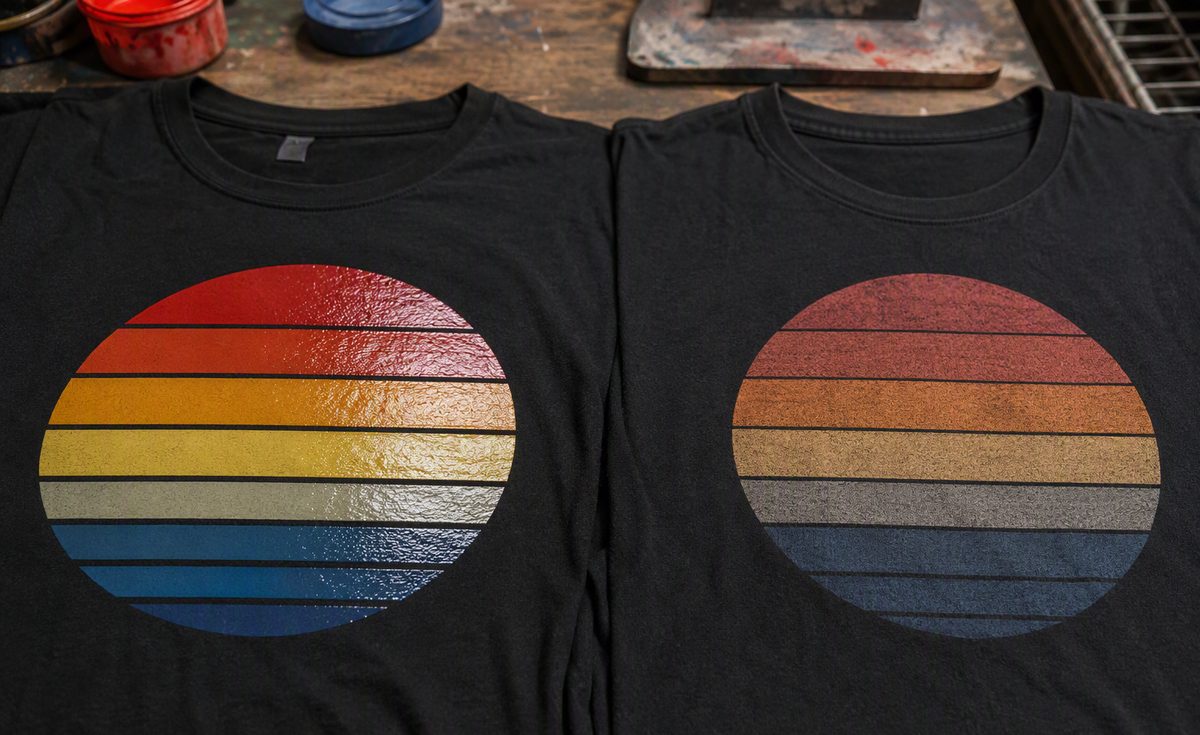
Plastisol: The Default for a Reason
Plastisol is PVC particles suspended in liquid plasticizer — essentially liquid plastic. It contains no solvent, so it cannot dry until you heat it. That’s its superpower: print half a run, go eat lunch, come back, keep printing. Nothing clogs, nothing skins over, nothing is wasted.
At around 320°F (160°C) the PVC particles fuse with the plasticizer and the whole ink film becomes one continuous plastic layer bonded to the fabric. Properly cured, it outlasts the shirt.
The honest weaknesses:
- Hand feel: a print you can feel — on big solid designs, a “sweat patch” that blocks breathability.
- PVC and plasticizers: fine to print with normal handling, but it’s a petroleum-based system with solvent cleanup, and some brand or kids’ contracts specify PVC-free. Phthalate-free formulations exist and are now common.
- Cracking shows up when prints are under-cured, over-cured, or stretched hard — a cure problem, not an ink problem.
Plastisol is a production tool: predictable, forgiving, fast. That’s not boring — that’s money.
Water-Based: The Softness Is Real, and So Are the Traps
Water-based ink works like the paint on your walls: water is the carrier, acrylic resin is the binder, pigment rides along. Cure happens in two stages — the water evaporates, then the resin cross-links. The ink soaks into the fibers instead of sitting on them, which is where the soft, breathable, vintage look comes from.
Now the five traps, in the order beginners meet them:
Trap 1: It dries in the screen
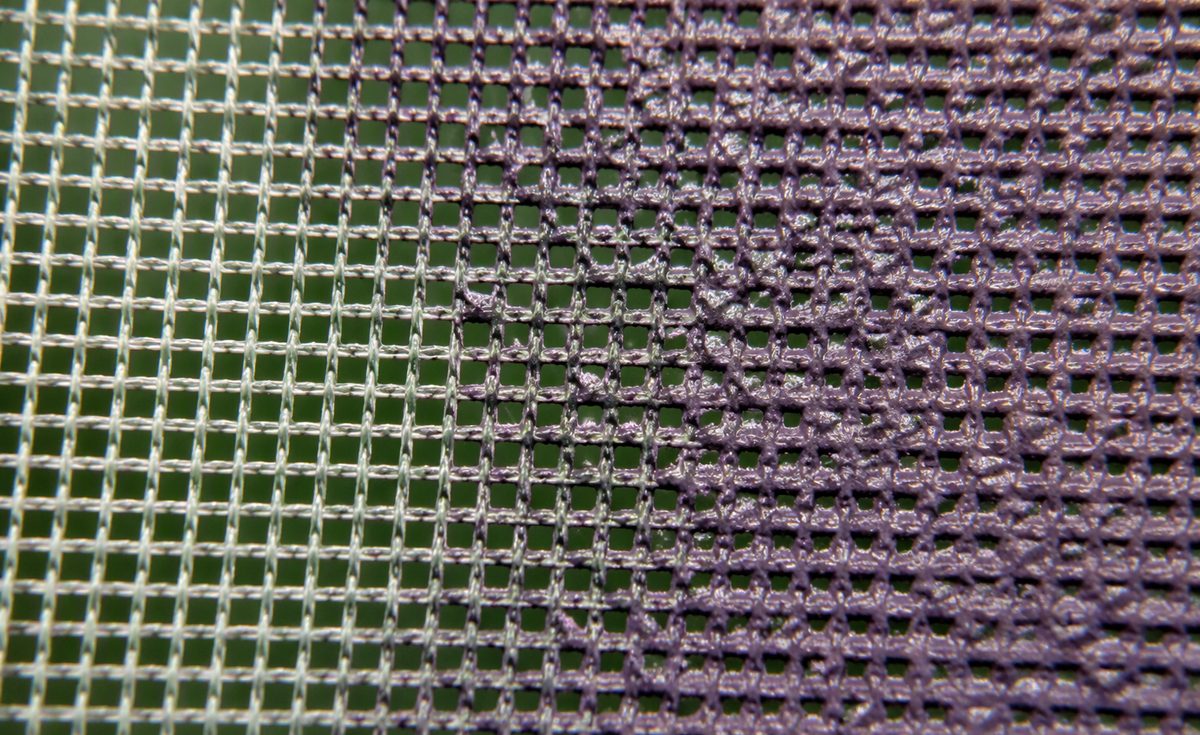
Water evaporates whether you’re ready or not. A few dozen prints in, fine mesh openings start closing up. Step away for ten minutes mid-run and you can come back to a ruined screen. This is the number-one beginner killer, and it changes how you work — more on first aid below.
Trap 2: It eats ordinary emulsion
The water in the ink slowly attacks standard photopolymer emulsions — the kind that expose perfectly well for plastisol. On anything beyond a test run, the stencil softens and breaks down mid-job. You need a water-resistant emulsion. (If your screens come from our exposure guide workflow, this is the only change — same exposure discipline, different chemistry.)
Trap 3: Catalyst pot life
Many water-based systems add a catalyst for cure speed and washfastness. Once mixed, the clock starts: pot life is typically 4–12 hours depending on the system, and after that the whole batch is landfill. So you mix for what you can print today, not for what the order totals. Plan ink by the day.
Trap 4: Dark garments fight back
Water-based ink is translucent by nature — colors printed straight onto dark fabric look muted and muddy. The standard fix is discharge printing: a water-based ink carrying an agent that strips the shirt’s own dye during cure and replaces it with your pigment. Gorgeous, soft, vintage — with three catches: it works only on 100% cotton (polyester won’t discharge), results vary by garment dye lot (always test-print), and discharge agents demand good ventilation. Some printers skip discharge and print high-solid acrylics (HSA) over an underbase instead — more opaque, slightly heavier hand.
Trap 5: Cure means “evaporate the water,” not “reach the temperature”
With plastisol, the moment the ink film hits cure temp, you’re done. With water-based, the print must reach temperature and stay there until the water is actually gone. A print can feel dry to the touch and still wash out on the first laundry cycle because moisture was trapped in the film. Water-based cure takes longer and rewards forced-air drying. This is the failure behind nearly every “water-based ink cracked/faded” horror story — the ink wasn’t bad, the water never left.
Dried in the Screen: Prevention and First Aid
Nobody’s water-based article tells you what to do at 2pm when the mesh starts closing. Here’s the working list.
Prevention, in order of impact:
- Flood after every print stroke. Leave a thin ink film covering the image area — it seals the openings from the air. This single habit buys you most of your working time.
- Keep a fine-mist spray bottle at the press. Mist the screen lightly between pulls — mist onto the ink, never blast the mesh directly.
- Plan shorter runs. Water-based sessions aren’t plastisol sessions. Before any break, scrape ink back into the tub and wash the screen out.
- Use the ink maker’s retarder (slow-dry additive) up to their stated maximum. Past that limit you’re trading washfastness for open time — a bad trade.
First aid: the moment you see openings closing, wipe the print side gently with a damp (not dripping) sponge, then flood. Most partially-dried screens come back. Fully dried is different — water won’t touch it, and aggressive washing starts stripping your emulsion instead. At that point it’s a reclaim job, and our screen washout guide covers that workflow.
One more connection worth making: thin inks belong on finer mesh. Water-based runs best around 230 mesh — the small openings meter the thin ink and the reduced emulsion buildup shortens exposure. The why is in our mesh count guide.
Your Dryer Votes Before Your Ink Does
Be honest about your curing equipment before choosing an ink system:
- Conveyor dryer: both systems work. For water-based, think in two stages — dwell time long enough to drive the water out, then cross-link.
- Flash dryer / heat press / heat gun only: plastisol is workable at small scale. Water-based can be cured this way, but it’s slow and consistency suffers — fine for samples, painful for orders.
Equipment votes first, ink votes second. If your curing can’t reliably remove water, water-based’s soft-hand advantage never makes it out the door.
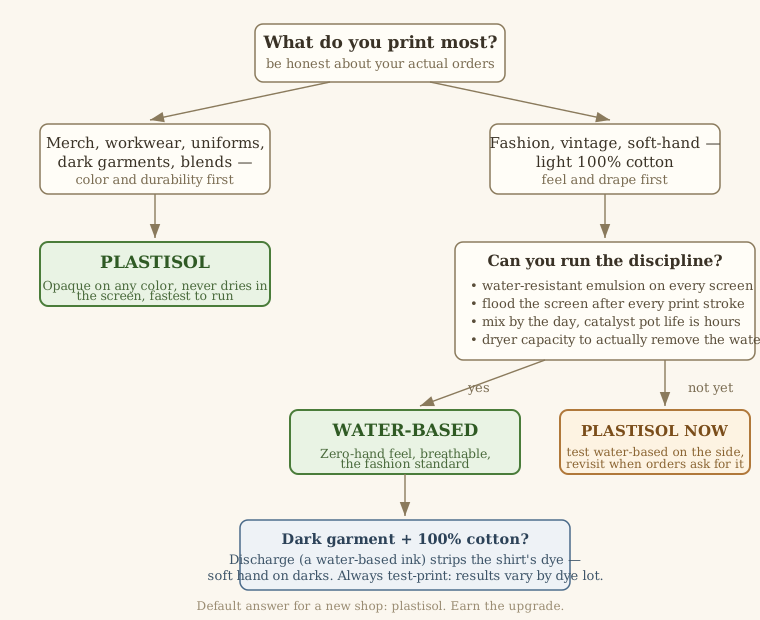
The Decision Tree
Want to see both inks side by side in motion? This short from Screen Print Direct is a quick visual rundown:
FAQ
Can I mix water-based and plastisol inks? Not in the same container — the chemistries are incompatible and you’ll get a curdled mess. You can use both in one design on separate screens (a plastisol underbase with water-based top colors, for example), as long as each ink gets its own screen, its own cure logic, and you flash the plastisol before overprinting.
Does water-based ink crack or wash out? Properly cured, no — the ink bonds into the fibers and lasts the life of the shirt. The horror stories are almost always cure failures: the water never fully left the film. If a water-based print fades or washes out fast, suspect the dryer before the ink.
Is water-based ink cheaper? No. The ink itself costs more per container, and the hidden costs pile up: screens lost to dried ink, catalyst-mixed batches expiring mid-week, longer cure times slowing the dryer. Plastisol’s near-zero waste is part of why it’s the industry default.
Do I need a special emulsion for water-based ink? Yes — a water-resistant emulsion. Standard photopolymer stencils soften and break down when water-based ink sits in them over a run. Same screen, same exposure process; just a different emulsion chemistry.
Can I cure water-based ink with a heat press? Yes, for samples and small runs: hover or light pressure with parchment, long enough to drive the moisture out — noticeably longer than plastisol needs. For production quantities the press time per shirt makes it impractical; that’s conveyor-dryer territory.
Plastisol is the reliable employee; water-based is the talented specialist with a temper. Get plastisol running smooth first. When orders start paying for hand feel, put water-based on the schedule — with the discipline to match.